
With Achaval Ferrer, Santiago Achával (together with his partners Manuel Ferrer and Roberto Cipresso) convinced both international and local consumers of the value of Malbec from old vineyards as an interpreter of terroir. The journey he later undertook—also alongside “Roby” Cipresso—at Matervini is a twist that pursues the same goal, but through non-alluvial soils of the Andean foothills. He speaks about all this and more in this interview.
“I was born in the United States, in Minnesota, near the Canadian border, with winters of minus 35 degrees. The whole town revolved around a hospital, a world-class center of medical excellence: the Mayo Clinic. My father is a doctor and was working there,” begins Santiago Achával.
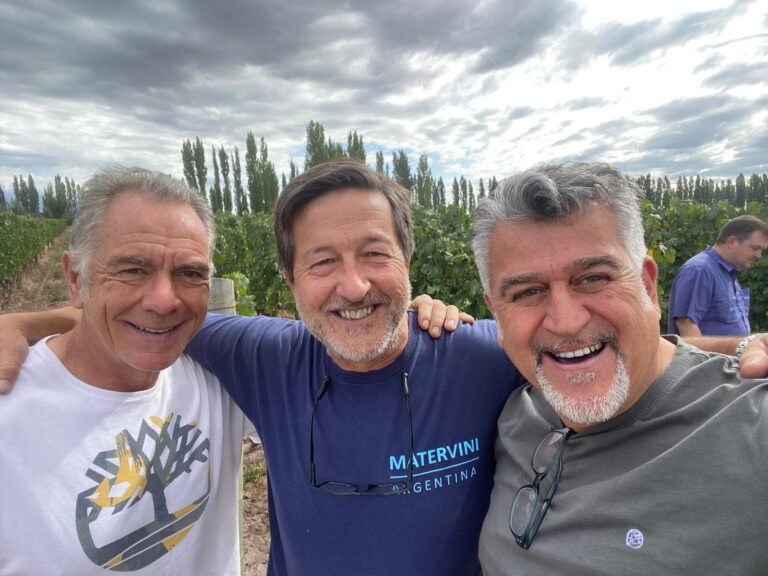
–At what age did you come to Argentina?
–I came to Argentina at six years old, without speaking a word of Spanish. My father was finalizing a job offer in Córdoba, while we lived for a few months in the Once neighborhood. They decided I had to go to school to learn Spanish. Today, kids are accompanied by their parents during the first weeks of school, even staying in the classroom. My experience was that they left me on the sidewalk of a school in Once and said: See you at noon.
–Was wine consumed at home?
–My father would have a small glass of wine with dinner, but as a doctor he was aware that 3% of the population is genetically predisposed to alcohol addiction. So he didn’t let us drink anything before 18. When I turned 18, I asked him: Dad, pass me the wine. He replied: You haven’t read the fine print of the contract. It says that at 18 you can buy your own wine. I say all this to make clear that in my childhood there was no wine world at all.
–So how did you get into wine?
–I studied Economics and started working at a company that paid for MBAs for employees who promised to return afterward. That’s how I ended up in California, in Palo Alto, doing an MBA in Business Administration at Stanford—just half an hour from Napa Valley. That’s where I caught the wine virus.
–What drew you in?
–It wasn’t a brand or a single wine. Some people say, my epiphany was Petrus ’82. I only had ten dollars per bottle for weekends; I couldn’t afford epiphany wines. What captured me was the aura of wine, its roots in the history of humanity.
–When did you start thinking about making wine?
–I came from Córdoba, a conservative society where if you graduated as an accountant, the expectation was that you would retire in that profession. Changing paths midway was frowned upon. But I ended up at Stanford, the cradle of entrepreneurship, where they told you: Find your dream, prepare, and leap. I thought: So it’s possible? At 27, I decided: before I’m 45, I want to have a winery.
–What kind of wine did you dream of?
–My purpose was to make a great wine, one that raises eyebrows. And with my business background, I knew that with a small winery I would never have the scale to make everyday wines.
–When did you take the first step?
–In the mid-90s we were at the beach. I was reading a book about yeasts under the umbrella, and my wife said: Santiago, do you realize you’ve been reading only about wine for ten years? I never studied oenology formally, but I bought every oenology book, read them, and reread them. My first attempt at making wine was with my brothers-in-law, with whom we bought a concrete company while I worked at Minetti. There was a tax deferral regime for agriculture, and I thought: I’ll use the VAT from the concrete company to launch the vineyard. I prepared, hired agronomists, drafted entire business plan books. But in the end my brothers-in-law said: We can’t lend you that deferred tax because it will appear in the balance sheet as debt and banks won’t lend us money. They were right, so I shelved the plan. A year later, Minetti proposed a tax deferral project. I said: Look, I have these books. The board assigned Manuel Ferrer, with whom I worked, and me to study the matter. Manuel said: I know an Italian winemaker who can help us. It was Roberto Cipresso. We brought Roby, and he got excited, loved Argentina, and fell in love with Malbec. In the end, Minetti abandoned the project, but Roby, Manuel, and I said, like the Three Musketeers: We’ll do it ourselves.
–How did you start?
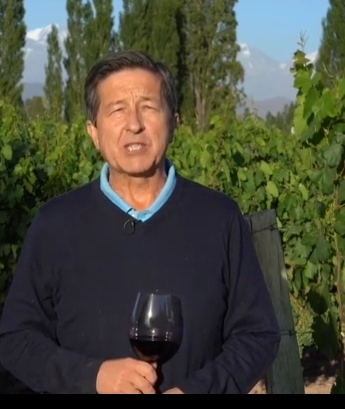
–I did some ventures to raise money, and in ’98 we bought land in Tupungato—the first property of what would become Achaval Ferrer. In ’99 I left Minetti to focus 100% on the winery. At first, the idea was to make a Bordeaux-style blend and another Rhône-style blend. But while touring Mendoza we found an old vineyard in La Consulta. Roby tasted the grapes and said: We have to buy it now. And we did. That’s where we made Finca Altamira ’99, a Malbec that became the first Argentine wine to earn five stars from Decanter.
–Why did you move from blends to Malbec?
–When you crash head-on into a three-meter brick wall, you recognize reality. Roby said: Guys, we’re facing something unique in the world. Argentina’s old Malbec vines are a monument to global viticulture. That required changing the whole plan and starting over, focused on old Malbec vines and terroir.
–Did recognition come quickly?
–It came from outside in. First Wine Spectator rated us, and then the Argentine wine world asked: What is this? But in Buenos Aires gastronomy we had a big breakthrough. A friend, who later became our sales manager, settled in Buenos Aires and told us: If you want to enter the gastronomic world here, you have to show the wine to Emilio Garip, from Oviedo restaurant. If he buys, all the other restaurants will buy. And that’s how it was. Recognition came from tasting the wines, not from Roby’s reputation—he was only 30—nor mine, which didn’t exist. Manuel and I were Cordobeses making wine in Mendoza; nobody paid us any attention!
–Was it hard to let go of Achaval Ferrer?
–In 2009–2010, during the global crisis, Roby told us: I have to sell my 10% because I need to cover a gap in Italy. So Manuel and I went looking for an investor and found an offer for 100% of the winery. I told my wife: I don’t want to sell, but as a father and husband I think we must take this, because it’s the future of the family. I had everything invested in the winery. And we sold.
–How was Matervini born?
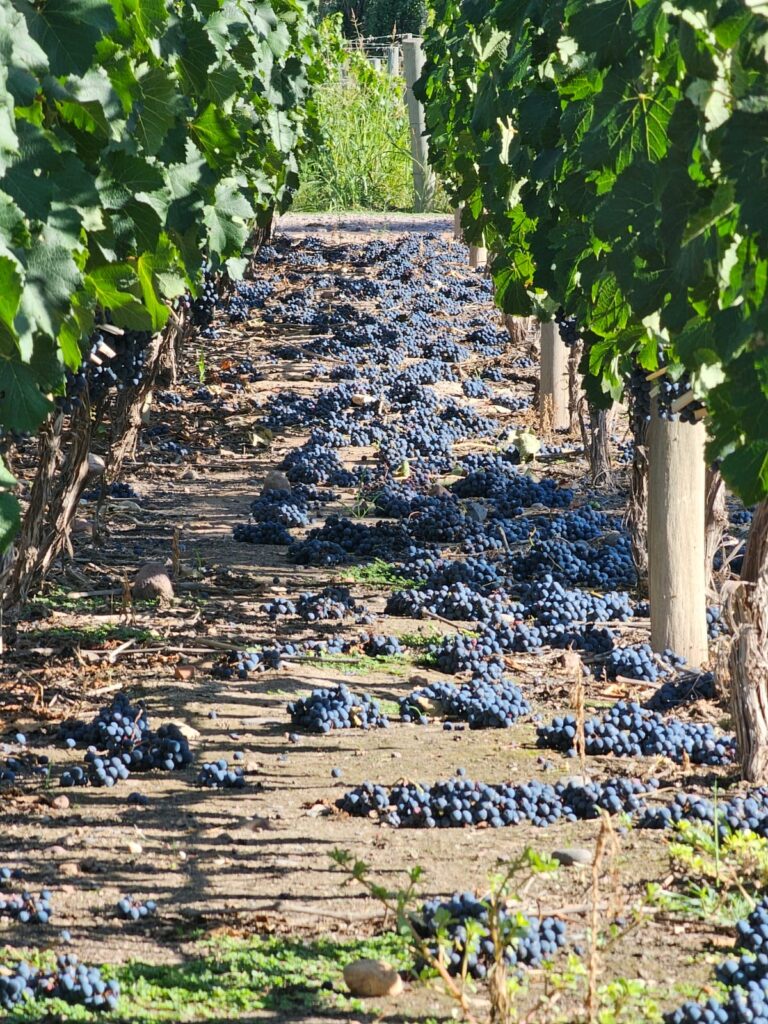
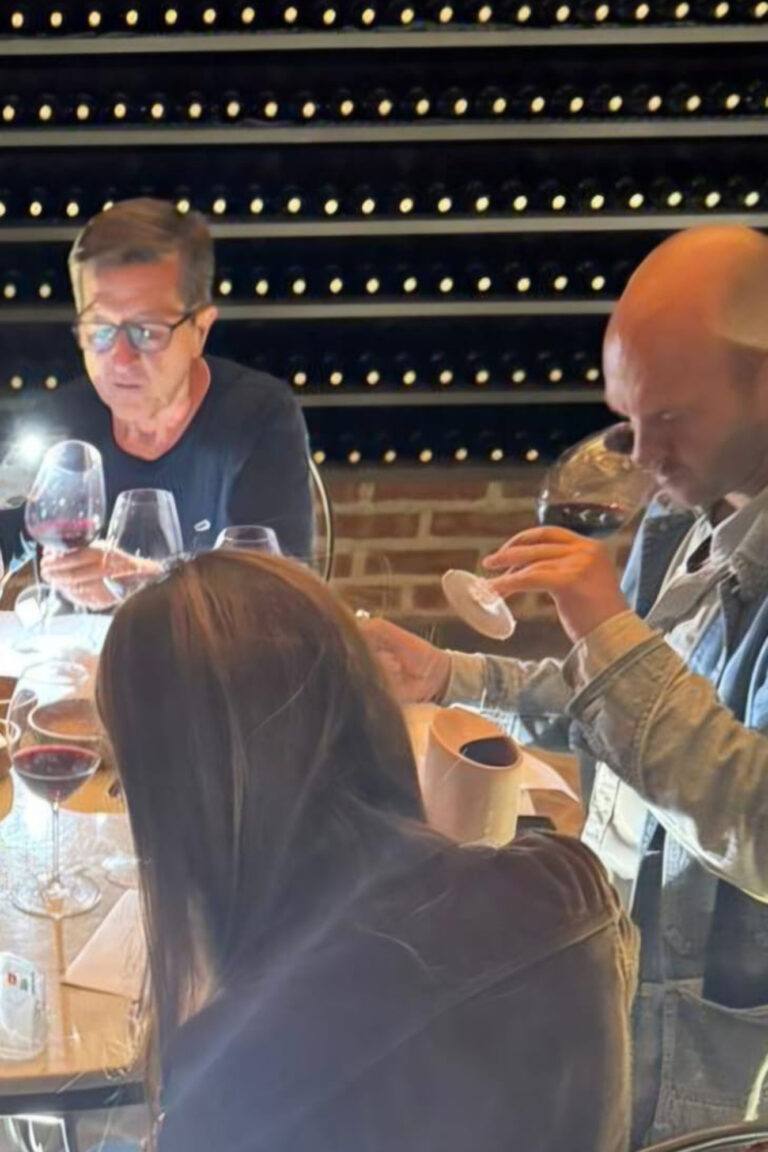
–With Roby we had a wine we were making in Salta that didn’t fit within Achaval Ferrer’s concept. We also had land we had bought above Mendoza, where the foothills meet the Andes, at 1,600 meters altitude. We planted it in 2008, and it too was outside Achaval’s paradigm. Roby had a powerful intuition that this was a new viticultural frontier. Suddenly, in 2013, it yielded 60 kilos of grapes with which we made an extraordinary wine. That’s when the next winery began to crystallize, with the idea of continuing with Malbec and terroir, but in non-alluvial geologies.
–Can you explain that concept?
–In alluvial soils, the stones that compose them are of different origins, mixed together. In non-alluvial soils, only the local stone is found. These are difficult places, generally uncultivated, because they cannot be irrigated traditionally with canals—only drip irrigation works. The twist with Matervini was to take Achaval Ferrer’s idea of using Malbec as interpreter, but bringing it to more powerful soils.
–Beyond Mendoza and Salta, you’re going to make wine in Patagonia.
–Two wines. One will be a Matervini from Valle Azul, from vineyards managed by Ribera del Cuarzo. Same concept: viticulture and winemaking identical across all wines, so that when tasting the Malbecs, the source of difference is the terroir. On the other hand, we’ll make a wine together with Ribera del Cuarzo. We don’t yet know its name, but we do know it will be a Merlot. Just as Malbec is the national interpreter, I believe Merlot can be Patagonia’s.
–What future do you imagine for Matervini?
–There are 2,000 kilometers of foothills in Argentina, with thousands of valleys that we are only just beginning to discover. Roby always says that Argentina stands at the epicenter of the world’s viticulture, because everything lies ahead: there are things here that don’t exist anywhere else, and the potential is enormous. That’s why I believe the future is about exploring all those valleys. I won’t live to see the finish line, but I’m not sure the finish line is what matters. I think the journey is the best part. And mine is driven by curiosity, culminating in emotion—when your being, your body, your soul, and your intellect all recognize truths. Because just as music can make us cry, the world of wine occasionally reveals one of those great truths. That is my pursuit: wines of emotion. You make one, and perhaps five years later you manage to make another, and in the meantime you keep struggling to achieve it again.
(This is a longer, alternative version of the one I published in La Nación.)
